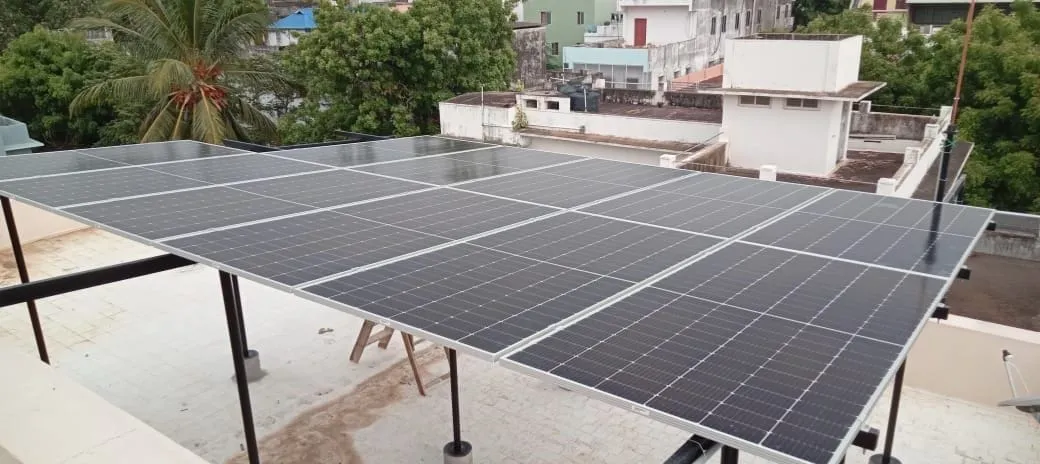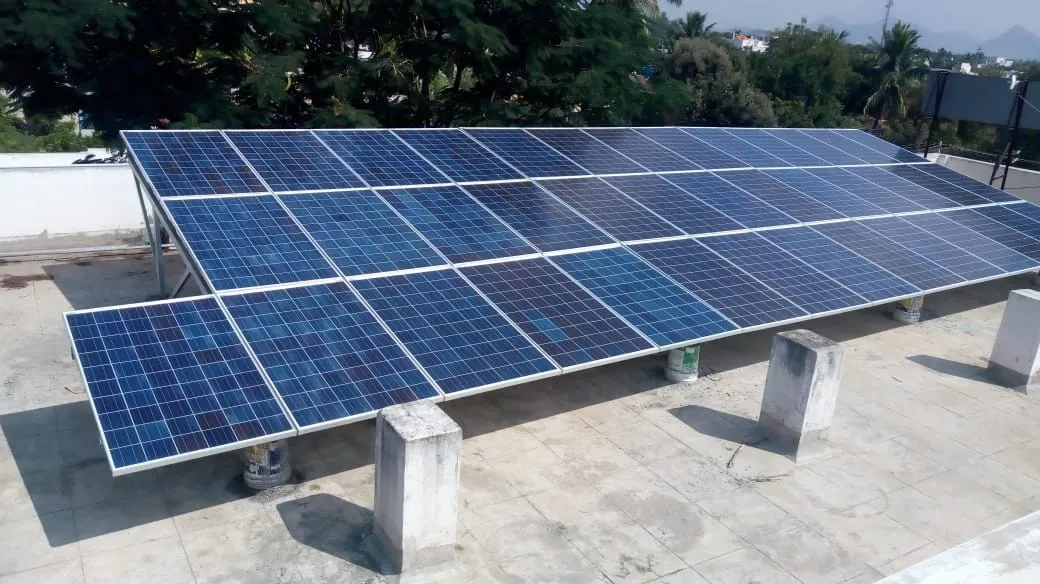


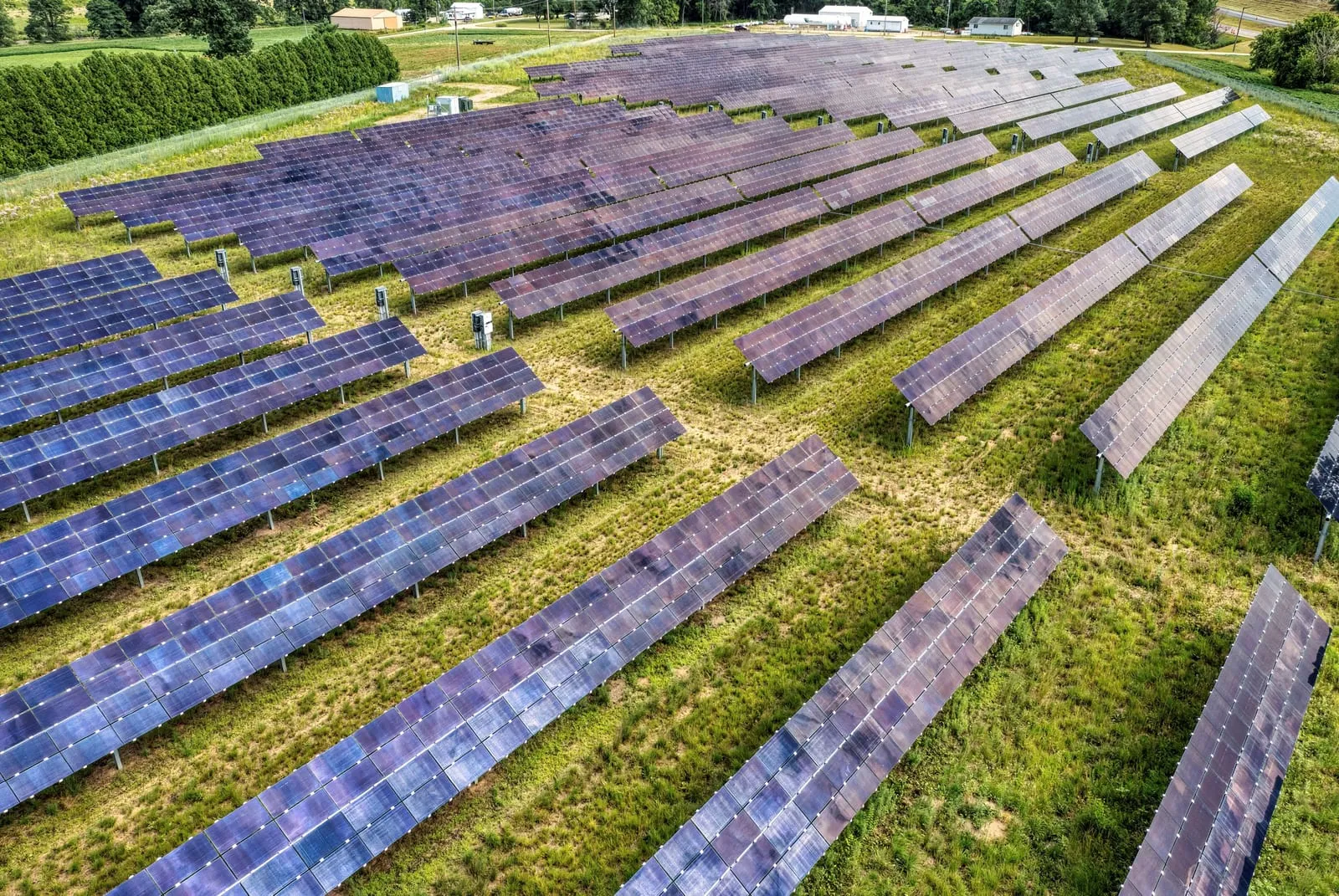
Coconut groves, banana plantations and vegetable plots across Kanyakumari district depend on pumping, especially between the monsoons. A solar water pump runs on free daytime sunshine — exactly when irrigation is needed.
How a solar pump works
Solar panels power a pump controller that drives a submersible or surface pump. There is usually no battery: the pump runs while the sun shines and stores water in a tank or directly irrigates the field. Output rises and falls with sunlight, so drip and sprinkler systems pair well with it.
Choosing the pump
- Water source — open well, borewell or canal decides submersible vs surface pump.
- Total head — the vertical lift plus pipe losses, in metres.
- Daily water need — depends on crop, area and season.
- AC or DC motor — DC (BLDC) pumps are efficient for smaller loads; AC pumps suit larger, existing setups.
Typical farm pumps in our district range from 1 HP to 7.5 HP. A rough guide is about 1 kW of panels per HP of pump.
Scheme support
Solar pumps have been supported under PM-KUSUM (Component B for standalone pumps and Component C for solarising grid-connected pumps) and through state programmes. Availability changes year to year, so confirm the current status on the official portal or ask us.
Practical tips
- Mount panels on a sturdy, galvanised structure above flood level.
- Keep panels clear of coconut fronds and shade from growing trees.
- Add a simple tank so you can store water on sunny days for evening use.