


Rooftop solar, planned around your home.
From reading your electricity bill to understanding the subsidy and net-metering steps, we help you decide whether rooftop solar makes sense for your family — and what size of system fits your roof and your usage.
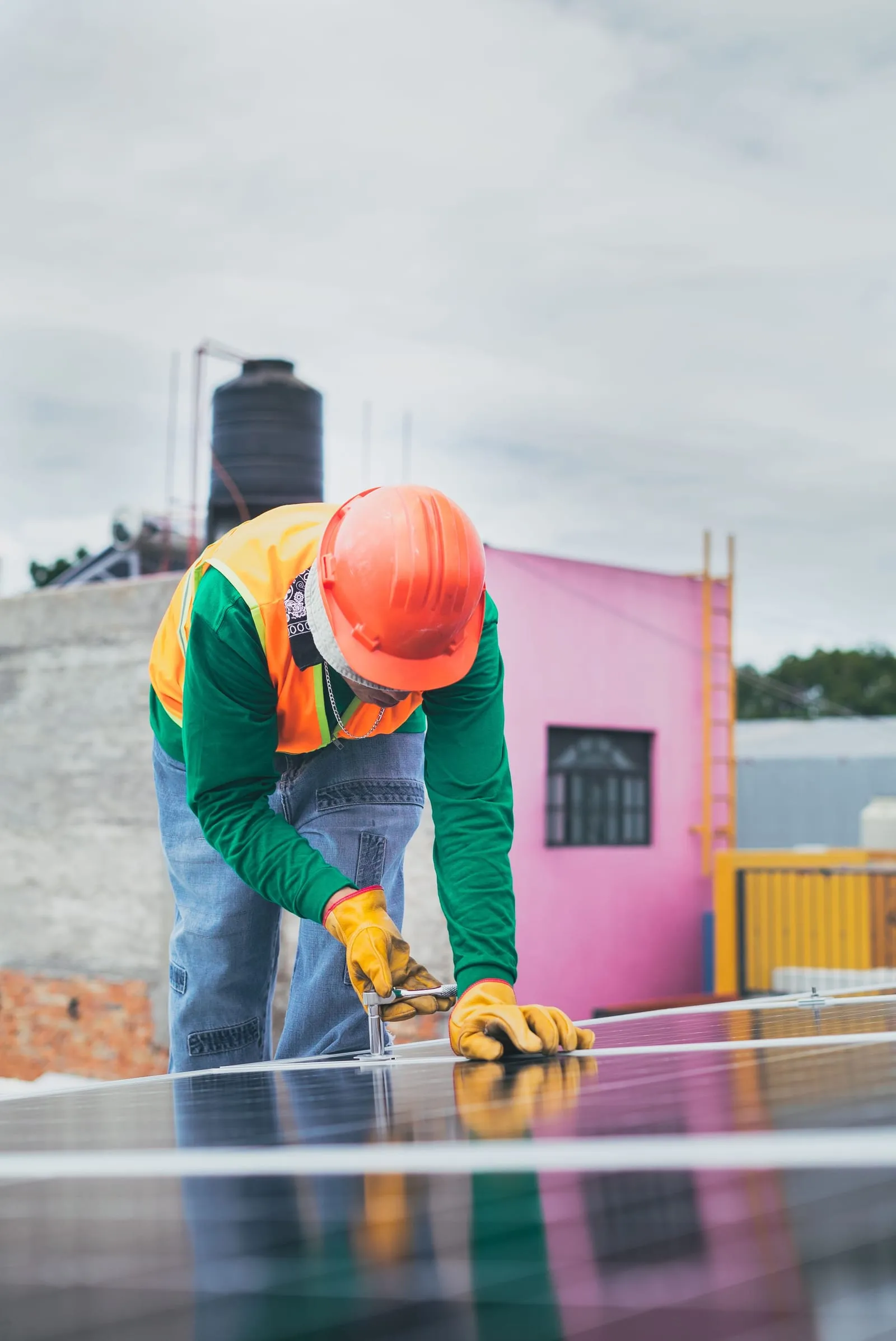 Representative image
What residential solar can offer
-
Lower energy charges
Solar generation offsets the units you buy from the grid. Under net metering, daytime surplus is set off against the power you use at night.
-
Central assistance for eligible homes
Grid-connected systems with DCR modules may qualify for up to ₹78,000 under PM Surya Ghar, paid after commissioning.
-
Sized for your roof
Capacity is planned around your consumption, shade-free roof area and sanctioned load — not a one-size package.
-
Clear, written estimates
You see the assumptions behind every figure, and what is estimated versus confirmed, before you decide.
What we look at together
Honest answers to these questions decide whether solar is a good investment for your property — and how large the system should be.
Try the savings calculator- 1
Your consumption and tariff slab
Tamil Nadu domestic bills are bi-monthly with free units and rising slabs. Savings depend on which slabs solar removes you from.
- 2
Shade-free roof space
A concrete roof typically needs about 100 sq ft of unshaded space per kW, including access and row spacing on an elevated structure.
- 3
Sanctioned load and connection
Rooftop capacity is generally limited to your sanctioned load, and subsidy applications need a connection in the applicant’s name.
- 4
Grid-connected or battery-backed
Most homes choose grid-connected systems with net metering. Batteries add backup during outages but increase the cost.
How a residential solar project moves forward
- 01
Share your bill
Tell us your usage or send a recent bill. We estimate a suitable capacity and indicative cost.
- 02
Roof assessment
We check roof condition, orientation, shading and the space available for an elevated structure.
- 03
Proposal & scheme steps
You receive a written proposal and guidance on the PM Surya Ghar application and DISCOM process.
- 04
Install & commission
Installation, net-meter installation by the DISCOM and commissioning, following the agreed scope.
Government schemes
Central assistance under PM Surya Ghar is available to eligible households for grid-connected systems with DCR modules installed by a registered vendor. Tamil Nadu adds a state top-up of up to ₹22,000, listed on the TNPDCL portal.
Residential Solar: common questions
What size system does a typical home need?
It depends on your consumption. As a rough guide, each kW in the Kanyakumari district generates about 1,450 units a year in good conditions — so a home using 250 units a month may need around 2 kW. Use the calculator for a figure based on your own bill.
Do I need to apply for the subsidy myself?
Applications are made on the national PM Surya Ghar portal using your consumer number. We can guide you through the steps, but approval and payment are made by the government after commissioning.
Can I add batteries later?
It depends on the inverter chosen. If backup is important to you, tell us at the consultation so that the system can be planned for it.
Other solar solutions
- Commercial Solar Explore rooftop solar for shops, offices and other commercial properties.
- Industrial Solar Evaluate solar opportunities for larger facilities with higher electricity consumption.
- Agricultural Solar Explore relevant solar solutions for agricultural properties and eligible pump applications.
See what solar could do for your home.
Get an estimate in under two minutes, then talk to us about a site assessment.