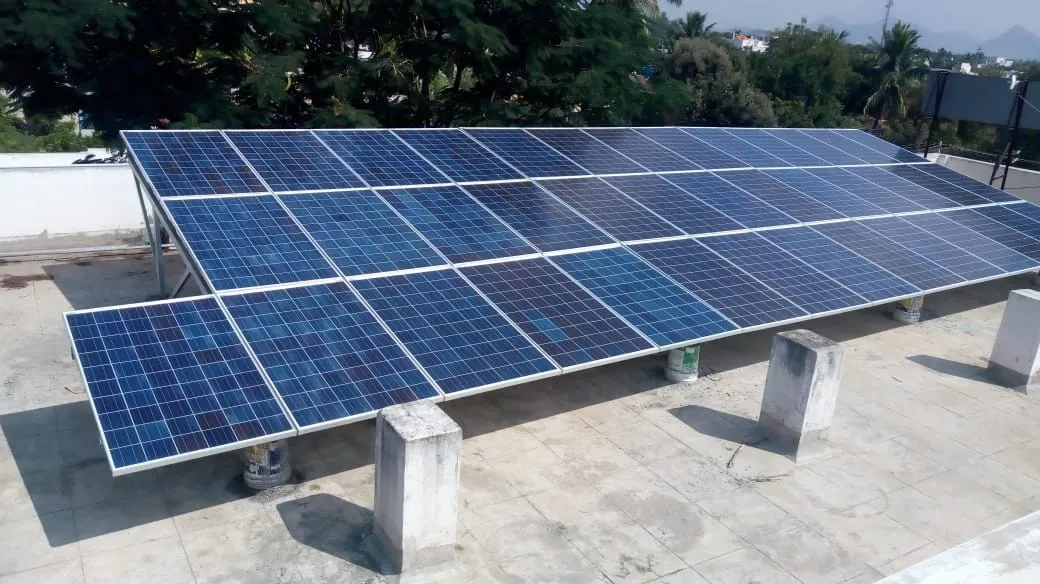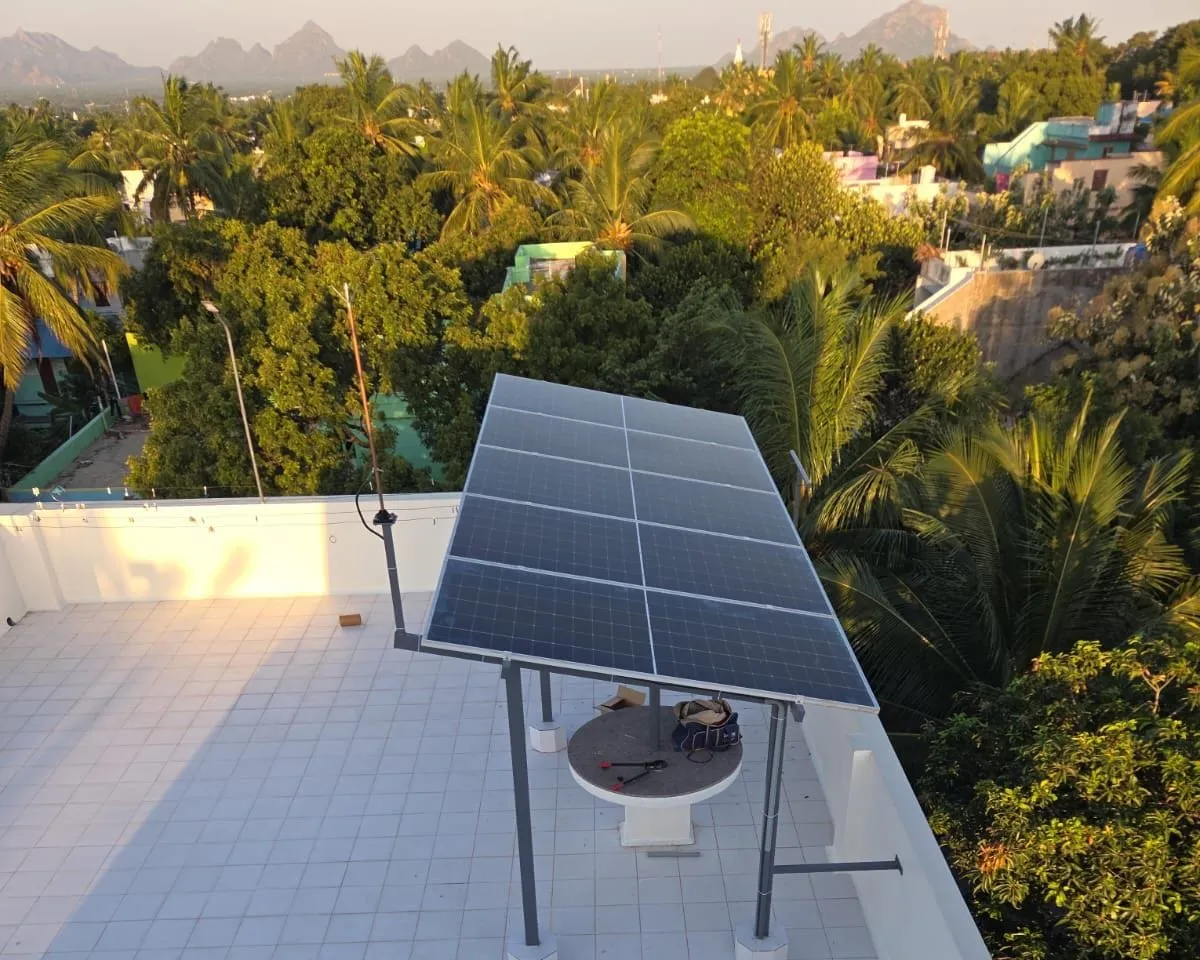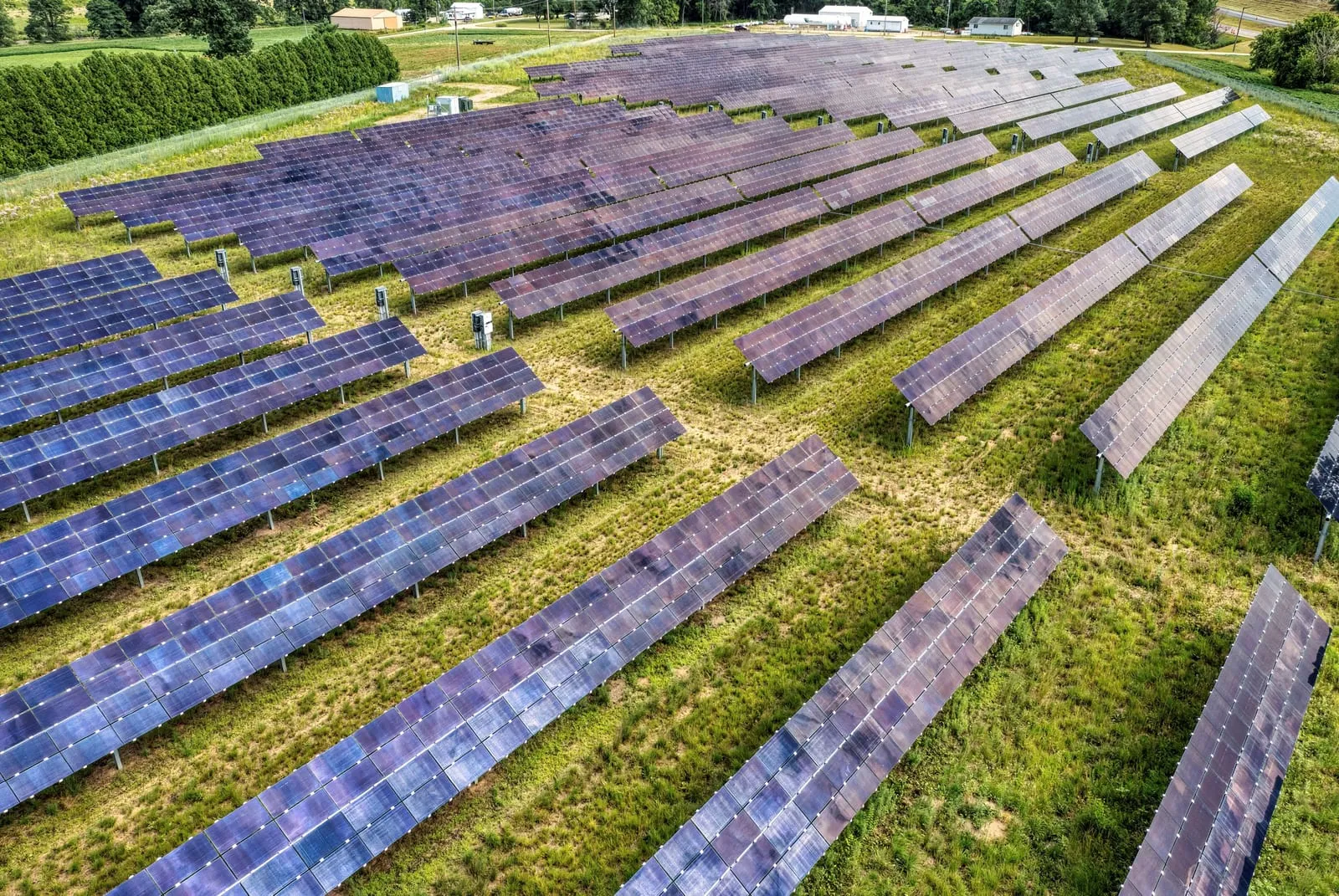


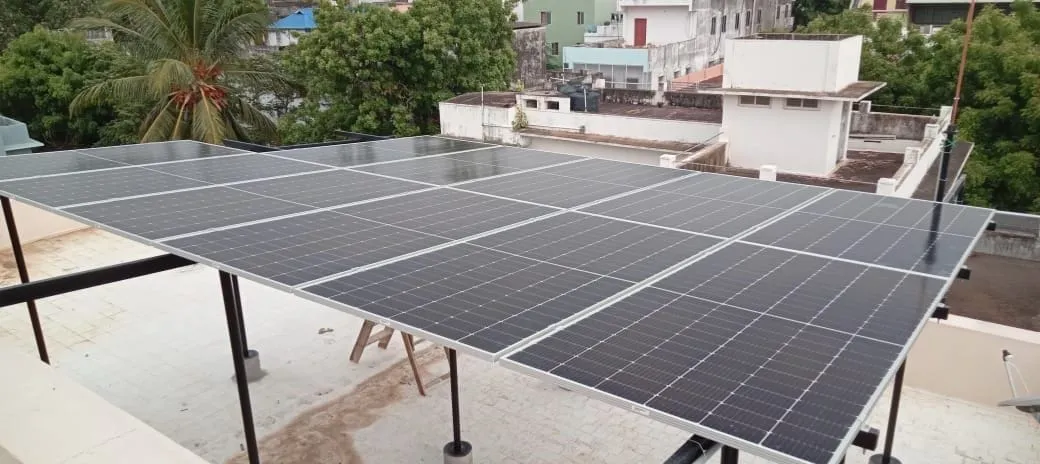
An off-grid solar system runs entirely on its own — panels, batteries and an off-grid inverter — with no TNPDCL connection. It is the right answer for a small number of sites in our district, and the wrong one for most town homes.
Where off-grid makes sense
- Farmhouses and rubber or spice estates in the foothills around Pechiparai, Kulasekaram and Kodayar, where the grid line is far away.
- Fishing sheds, net-mending sheds and storage on the coast.
- Watch-houses, poultry or dairy units on agricultural land.
- Sites where a new service connection would take too long or cost too much.
Where it usually does not
If you already have a TNPDCL connection, off-grid usually costs much more than on-grid or hybrid for the same comfort. The batteries must cover every night and every rainy day, and the grid subsidy for rooftop solar does not apply to standalone systems.
For backup in a grid-connected home, a hybrid system is almost always the better choice.
Designing for two monsoons
Kanyakumari has both the south-west and north-east monsoons, so there can be several cloudy days in a row. An off-grid design needs enough panels to recharge the battery on weak days, and enough battery for one to two days of autonomy for critical loads. A backup generator or a small grid point is often worth planning.
How we quote off-grid systems
Off-grid systems are quoted individually after a site visit, because the loads and the terrain vary so much. Our online calculator covers on-grid and hybrid; for off-grid, book a free consultation and we will work it out with you.