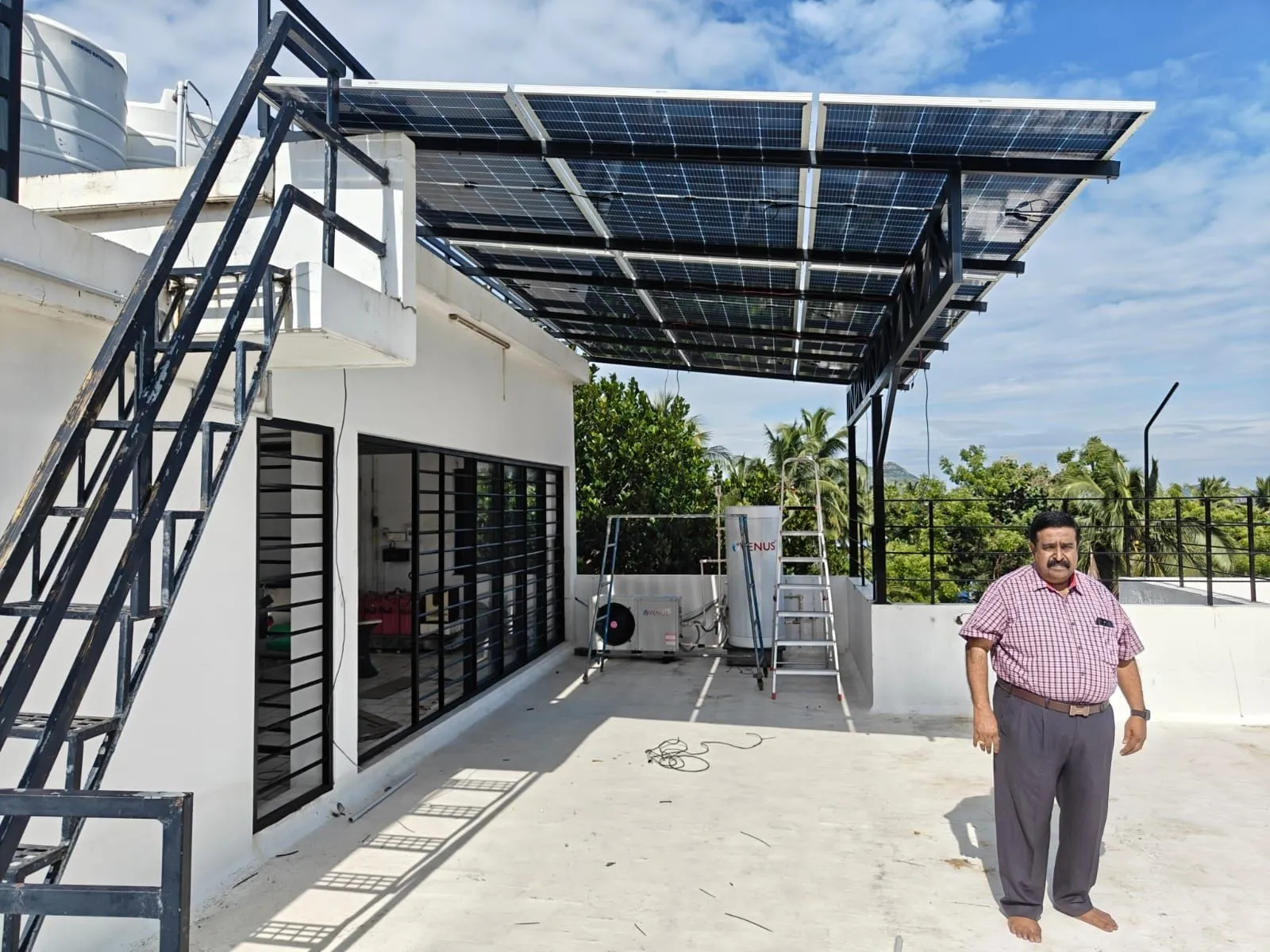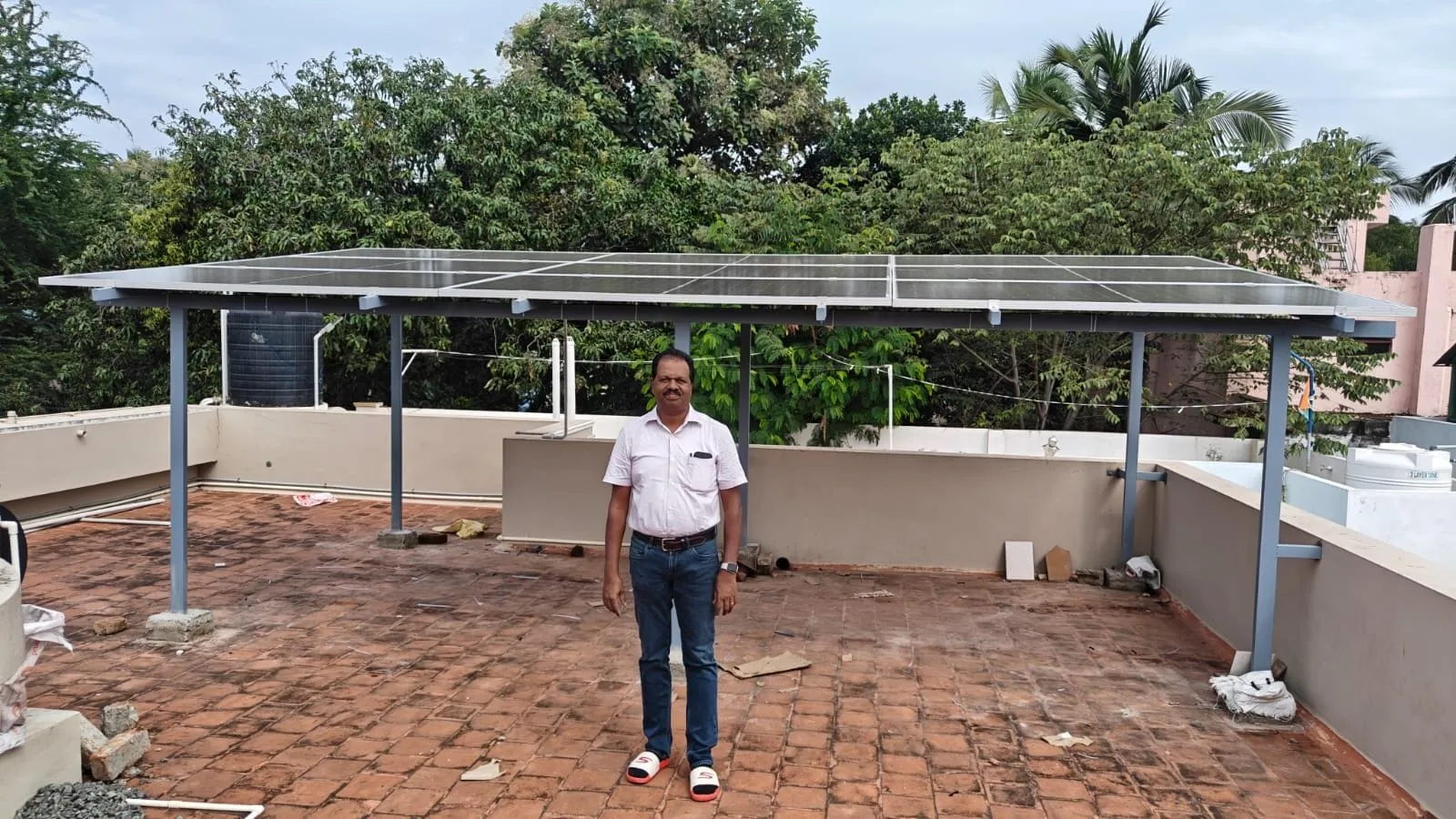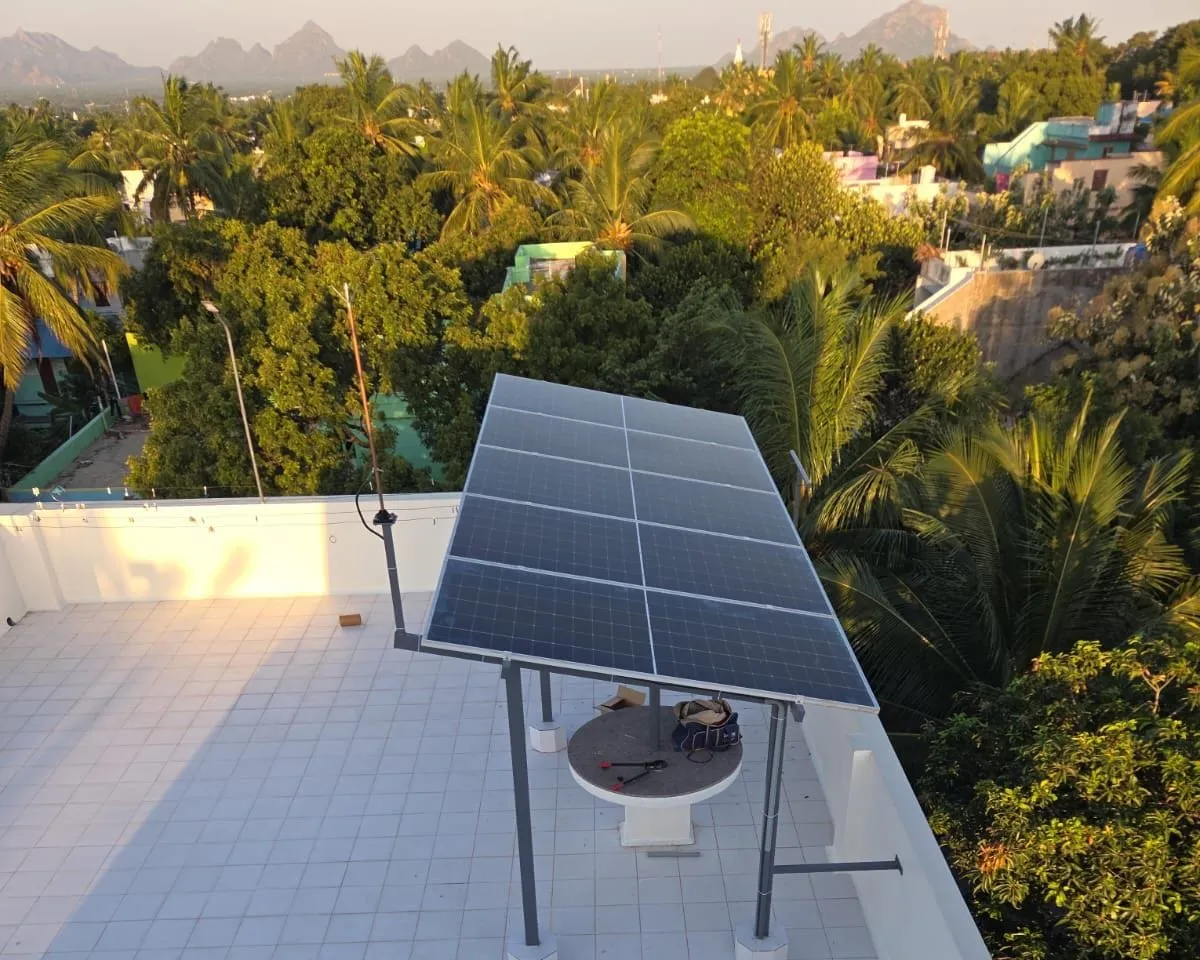


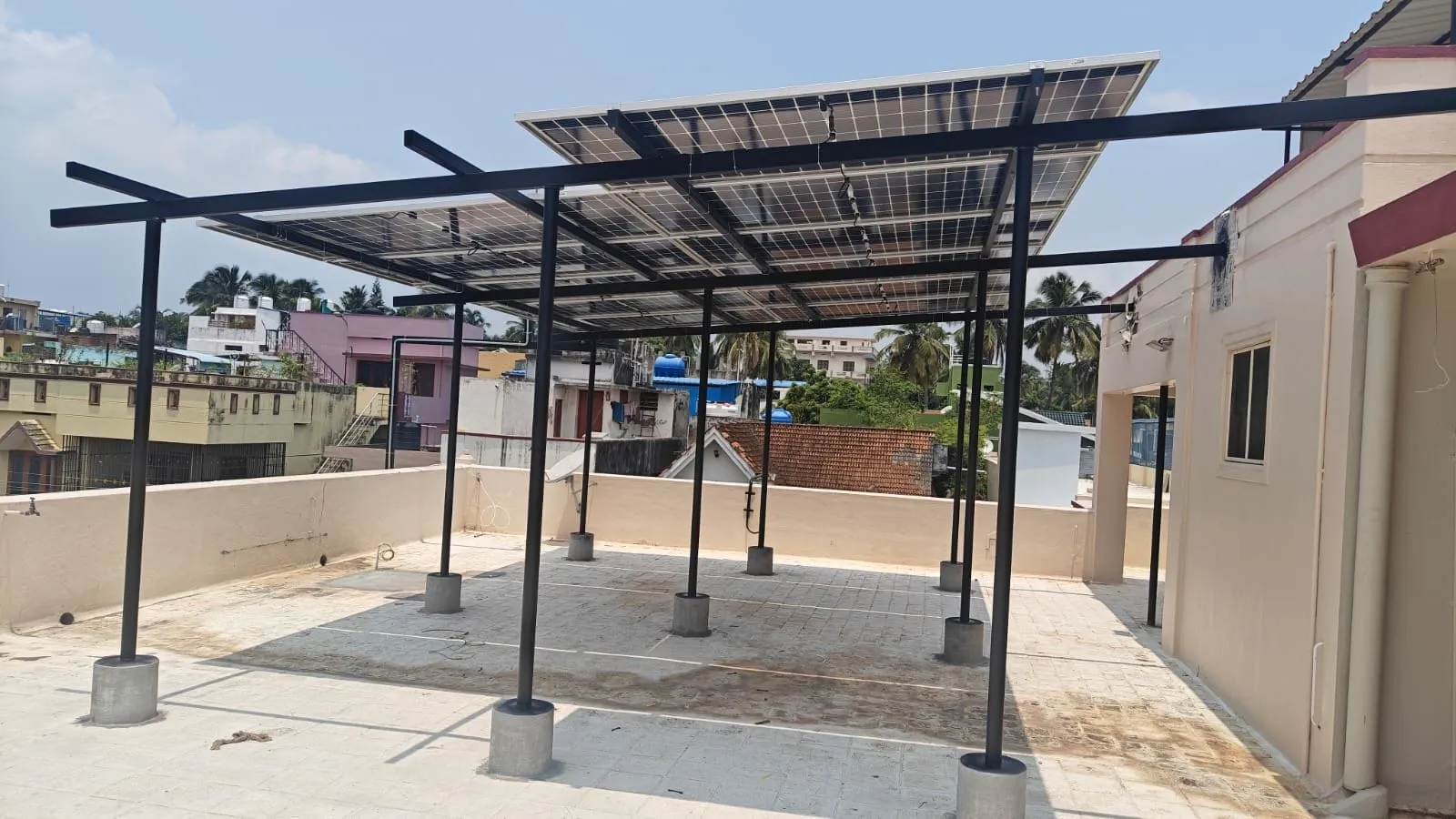
For most homes in Nagercoil, an on-grid (grid-tied) rooftop system is the simplest and most affordable way to cut the electricity bill. It has no batteries, it works with your existing TNPDCL connection and it is the system type that qualifies for the PM Surya Ghar subsidy.
How an on-grid system works
Solar panels on your roof make DC electricity during the day. An on-grid inverter converts it to AC and feeds your home first. When the panels make more than you are using, the extra flows to the TNPDCL grid through a bi-directional meter. At night, or on a cloudy monsoon afternoon, you draw from the grid as usual.
Because the grid acts like a store, you do not need batteries. That keeps the cost low and maintenance simple.
An on-grid inverter switches off when the grid fails — a safety rule that protects line workers. If you need power during cuts, look at a hybrid system.
How much will it generate in Kanyakumari district?
A useful rule of thumb for our region is 1 kW of panels ≈ 4–5 units (kWh) a day on average across the year. Kanyakumari gets two monsoons, so generation dips in June–July and again in October–November and is strongest from January to May.
| System size | Units per day (approx.) | Units per two-month bill (approx.) |
|---|---|---|
| 2 kW | 8–10 | 480–600 |
| 3 kW | 12–15 | 720–900 |
| 4 kW | 16–20 | 960–1,200 |
| 5 kW | 20–25 | 1,200–1,500 |
Real output depends on shade, roof direction, panel tilt and dust. We check all of this during the site visit. You can try your own numbers in the solar savings calculator.
Choosing the right size
Start from your TNPDCL bill. Tamil Nadu domestic bills are bi-monthly, so divide the units on your bill by 60 to get your daily use, then divide by 4–5 to get a rough kW size.
- A typical 2BHK using 300–400 units per bill usually needs 2–3 kW.
- A larger home with two or more air conditioners often needs 4–5 kW.
- Leave about 80–100 sq ft of shade-free roof for every kW.
Subsidy for on-grid systems
Residential on-grid systems can qualify for the central PM Surya Ghar: Muft Bijli Yojana subsidy — ₹30,000 per kW for the first 2 kW and ₹18,000 for the third kW, up to ₹78,000. Tamil Nadu also lists an additional state top-up of ₹5,000, ₹10,000 or ₹22,000 depending on system size. See our government subsidies guide for details.
Scheme amounts and rules change. We confirm the current PM Surya Ghar and Tamil Nadu figures for your connection during the free consultation.
Coastal conditions: what we do differently
Homes near the coast — Colachel, Muttom, Kanyakumari town, Manakudy — face salt air that corrodes ordinary steel. We use galvanised mounting structures and stainless fasteners, and we plan the cable routing so water cannot collect. Many Nagercoil homes also choose an elevated structure so the terrace below stays usable and shaded.
Frequently asked questions
Will an on-grid system work during a power cut?
No. For safety the inverter shuts down when the grid is off. Choose a hybrid system if you need backup.
How long do the panels last?
Good quality panels are designed to keep producing for around 30 years, with a gradual drop in output each year.